


Did you know your gut is often called your second brain?
That’s not just a metaphor. The gut houses a vast community of microbes like bacteria, fungi, viruses that communicate with your brain, regulate your immune system, and influence mood. In simple terms, gut health is about maintaining a balanced microbiome so digestion, immunity, and even mental well-being work in harmony.
Food plays a starring role here. What you eat can nurture or damage that delicate microbial balance.
In this blog, we’ll explore science-backed foods your microbiome loves most and share gut health diet recipes to help you restore balance naturally.
Understanding Gut Health
Think of your gut microbiome as an ecosystem inside you; a bustling city of trillions of microbes, unique to you. These microbes are symbiotic in a healthy gut: most help you, some are neutral, and a few can be harmful when balance is lost.
Disruption of that balance called dysbiosis is linked to digestive issues, chronic inflammation, and even metabolic or mental disorders.
Key Functions of Gut Bacteria:
They:
- Break down fibre into short-chain fatty acids (SCFAs), which reduce inflammation.
- Produce vitamins like B12 and K.
- Train the immune system to fight infections.
- Communicate with the brain via the gut-brain axis, influencing mood and cognition.
Signs Your Gut May Be Unhappy
Symptom |
Why It May Indicate Gut Imbalance |
| Frequent bloating or gas | Excess fermentation or altered bacterial metabolism |
| Irregular bowel movements (constipation/diarrhea) | Disrupted motility or dysbiosis |
| Persistent fatigue / brain fog | Inflammation or poor nutrient absorption |
| Food sensitivities or unexplained symptoms | Leaky gut or immune dysregulation |
Why Diet Is One of the Easiest Levers to Pull
Your microbiome responds rapidly to changes in what you eat. Even short-term dietary shifts can shift microbial populations. It is also said that feeding probiotics without providing prebiotics is like adopting pets but never feeding them. You need both.
In short: fuelling the right bacteria via diet is more effective (and safer) than many supplements.
Best Foods for Gut Health: What Your Microbiome Loves
1. Probiotic-Rich Foods
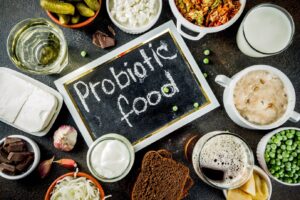
Probiotics are live beneficial bacteria that can enhance the gut microbiome. Include these probiotic-rich foods:
- Dairy-Based: Yogurt, kefir, and aged cheeses.
- Plant-Based: Tempeh, miso, and fermented soy products.
- Vegetable-Based: Kimchi, sauerkraut, and pickled vegetables.
Note: Choose unpasteurised versions to ensure the presence of live cultures.
2. Prebiotic Foods
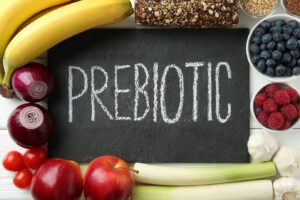
Prebiotics are non-digestible fibres that feed beneficial gut bacteria. Incorporate these prebiotic-rich, gut healthy foods in your diet:
- Allium Vegetables: Garlic, onions, and leeks.
- Fruits: Bananas, apples, and berries.
- Root Vegetables: Asparagus, Jerusalem artichokes, and sweet potatoes.
3. High-Fibre Foods
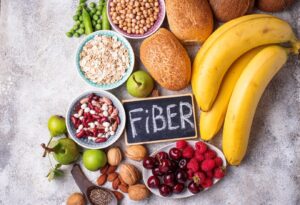
Fiber is essential for maintaining a healthy gut. It promotes regular bowel movements and serves as food for beneficial gut bacteria. Add these fibre-rich foods:
- Whole Grains: Oats, barley, quinoa, and whole wheat bread.
- Legumes: Lentils, chickpeas, black beans, and kidney beans.
- Fruits and Vegetables: Apples, pears, carrots, broccoli, and leafy greens.
Tip: Aim to consume a variety of fibre sources to promote microbial diversity in the gut.
4. Polyphenol-Rich Foods
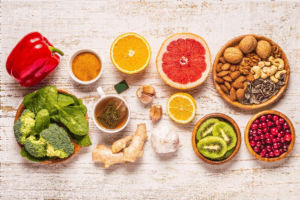
Polyphenols are plant compounds with antioxidant properties that can influence gut microbiota composition. Include these polyphenol-rich foods:
- Berries: Blueberries, strawberries, and raspberries.
- Nuts and Seeds: Almonds, walnuts, and flaxseeds.
- Beverages: Green tea and coffee.
Note: Polyphenols can also have anti-inflammatory effects, supporting overall gut health.
5. Fermented Drinks

A liquid way to sip on probiotics:
- Kombucha – fermented tea with beneficial bacteria and yeast
- Chaas / Buttermilk – traditional fermented dairy drink (if tolerated)
These gut healthy drinks can be a refreshing way to boost microbial intake.
Foods to Limit for Better Gut Health
Just as some foods are beneficial, others can disrupt gut balance.
- Highly Processed Foods & Packaged Snacks
These often contain additives, emulsifiers, and trans fats, which have been linked to altered gut barrier function and dysbiosis. - Excess Sugar & Artificial Sweeteners
Overfeeding of simple sugars can encourage harmful bacterial overgrowth. Some artificial sweeteners are shown to change microbial composition adversely. - Fried / Oily Foods
High in saturated fats, which may promote gut inflammation and reduce microbial diversity. - Overuse of Antibiotics
While sometimes medically necessary, antibiotics are a blunt tool—they wipe out both bad and good microbes. Always use under supervision.
Disclaimer: “This blog is for educational purposes; consult a doctor before making medical decisions.”
Gut-Friendly Recipes You’ll Actually Love
Eating gut healthy foods doesn’t have to be boring. Here are some delicious recipes that are both nutritious and easy to prepare:
1. Breakfast: Overnight Oats with Banana, Flaxseeds & Yogurt
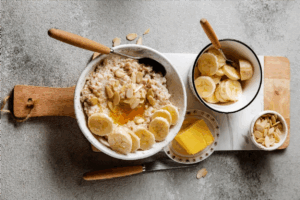
Ingredients:
- ½ cup rolled oats
- 1 tbsp ground flaxseed
- ¼ – ½ banana (sliced)
- ¼ cup plain probiotic yogurt
- ½ cup milk (plant or dairy)
Instructions:
- Mix oats, flaxseed, milk in a jar.
- Stir in yogurt and banana slices.
- Refrigerate overnight.
- Top with berries or nuts in morning.
Why it’s gut-friendly:
- Oats + flaxseed supply prebiotic fibre
- Yogurt introduces live probiotics
- Bananas feed beneficial microbes
Tip: Use Greek yogurt or low-sugar options.
2. Snack: Roasted Chickpeas with Turmeric & Spices
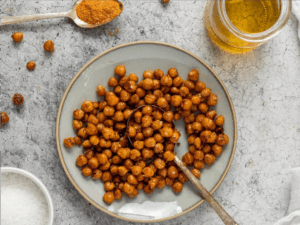
Ingredients:
- 1 can chickpeas (drained & rinsed)
- 1 tsp turmeric
- ½ tsp cumin & paprika
- 1 tbsp olive oil
- Pinch of salt
Instructions:
- Preheat oven to 200 °C (400 °F).
- Toss chickpeas with oil & spices.
- Spread on baking tray, roast ~25–30 mins till crispy.
- Cool slightly and enjoy.
Why it’s gut-friendly:
- Chickpeas are high in fibre and resistant starch
- Turmeric adds anti-inflammatory benefits
3. Lunch: Quinoa Bowl with Sautéed Greens, Avocado & Kimchi
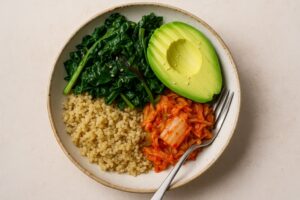
Ingredients:
- 1 cup cooked quinoa
- 1–2 cups leafy greens (spinach, kale), sautéed
- ½ avocado, sliced
- ½ cup kimchi
- Lemon juice, olive oil, salt & pepper
Instructions:
- Layer quinoa in a bowl.
- Top with greens, avocado slices, and kimchi.
- Drizzle olive oil and lemon juice, season.
Why it’s gut-friendly:
- Quinoa + greens supply fibre & micronutrients
- Avocado offers healthy fats
- Kimchi contributes probiotics
4. Drink: Ginger-Buttermilk Refresher
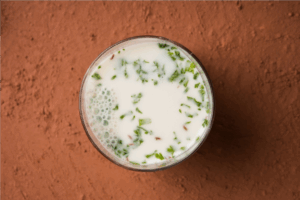
Ingredients:
- 1 cup buttermilk or yogurt-thinned mixture
- ½ tsp freshly grated ginger
- Pinch of cumin & black salt
- Cold water / ice as needed
Instructions:
- Whisk together buttermilk, ginger, spices.
- Add water or ice to desired consistency.
- Serve chilled.
Why it’s gut-friendly:
- Fermented dairy brings probiotics
- Ginger has anti-inflammatory and digestive benefits
5. Dessert: Chia Seed Pudding with Berries & Dark Chocolate
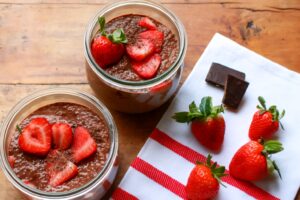
Ingredients:
- 3 tbsp chia seeds
- 1 cup milk (plant or dairy)
- ½ tsp vanilla
- ¼ cup mixed berries
- 10g dark chocolate shavings
Instructions:
- Mix chia seeds, milk, and vanilla in a jar.
- Refrigerate at least 4 hours (or overnight).
- Top with berries and dark chocolate before serving.
Why it’s gut-friendly:
- Chia seeds are loaded with fibre and omega-3s
- Berries & dark chocolate give polyphenols
Tip: Adjust chia amount if texture is too thick.
Lifestyle Habits That Support Gut Health
Your gut health diet sets the stage, but habits keep the show running smoothly.
- Hydration: Water helps move fibre through your gut and prevents constipation.
- Regular Exercise: Even 150 minutes/week of moderate activity supports gut diversity.
- Stress Management: Chronic stress releases cortisol, which can disrupt gut barrier and microbiota. Techniques like meditation, yoga, or deep breathing help.
- Consistent Sleep: Poor sleep is tied to gut dysbiosis and metabolic issues.
- Mind Medication Use: Avoid unnecessary antibiotics or NSAIDs. Always consult your physician before altering prescriptions.
Final Thoughts
Your gut is much more than a tube that digests food. It is a dynamic ecosystem influencing immunity, mood, and vitality. By embracing gut-friendly foods and avoiding overly processed items, you give your microbiome the environment it needs to thrive.
Start small. Try one recipe this week, sip a ginger-buttermilk drink, or swap a snack for roasted chickpeas. Over time, these habits compound into real shifts in energy, digestion, and wellness.
Want more recipes, nutrition insights, and list of foods good for gut health? Keep exploring StayHealthyAndStayFit.
FAQs on Gut Health
- What is the best food for gut health?
Fermented foods like yogurt, kefir, and kimchi are among the best because they replenish healthy bacteria. - How long does it take to improve gut health with food?
It varies, but some studies show microbiome changes within 2–4 weeks of a fibre-rich diet. - Are probiotics or prebiotics better?
Both are essential. Probiotics introduce new bacteria, while prebiotics feed them.
