


You’re 38, maybe 41 and something feels off. Your sleep is broken, your mood swings are sharper, your knees ache after a morning walk, and your heart occasionally thuds in your chest for no reason. You Google your symptoms and land on a dozen different rabbit holes: thyroid, anxiety disorder, depression, burnout.
But here’s what most doctors don’t tell you early enough: you could be in perimenopause.
Perimenopause, the hormonal transition leading up to menopause, typically begins between ages 35 and 50. It can last 4 to 10 years, and during that entire stretch, hot flashes may be the last symptom to show up, not the first. What comes before is a constellation of unusual perimenopause symptoms so diverse that even clinicians miss the connection.
Let’s not panic and understand the 15 early perimenopause symptomsin detail.
Too Long; Didn’t Read? Here’s the Gist
- Perimenopause can begin in the late 30s, years before hot flashes appear
- Estrogen, progesterone & testosterone all fluctuate; affecting brain, joints, heart, skin, gut & more
- Symptoms like anxiety, brain fog, joint pain & heart palpitations are hormonally driven, not “just stress”
- Only half of perimenopausal women discuss symptoms with a doctor; most wait 6+ months
- Lifestyle changes, HRT & targeted supplements can significantly ease symptoms
- A perimenopause-literate doctor is your most important asset right now
What Is Perimenopause and Why Does It Start So Early?
Perimenopause is the years-long hormonal transition before your final period, marked by erratic fluctuations in estrogen and progesterone. It typically starts in the mid-40s but can begin in the late 30s. Most women don’t recognize early perimenopause symptoms because the “famous” hot flashes often arrive late. The real warning signs are subtler, systemic, and widely misdiagnosed.
Dr. Mary Claire Haver, OB/GYN and author of The New Menopause, describes it powerfully: Perimenopause is not a waiting room. It is its own distinct biological phase; a 7–10-year hormonal transition that begins long before periods stop and touches every organ system in the body.
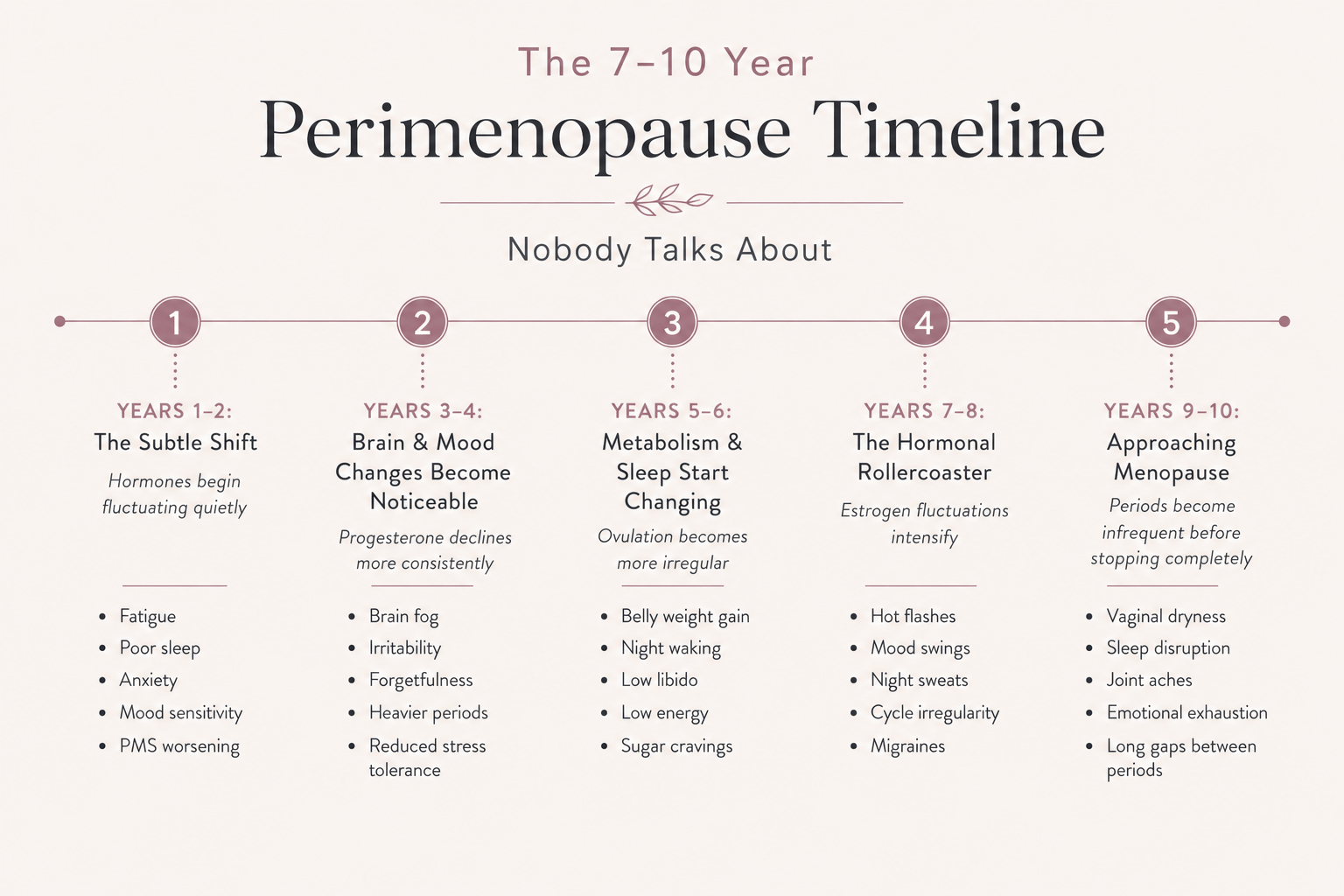
Here’s the core biology: your ovaries begin producing less estrogen and progesterone, but not in a smooth, steady decline. They surge and crash erratically, sometimes producing more estrogen than ever before, then dropping sharply. This hormonal chaos is what creates such a wild variety of symptoms.
Did you know: Over 90% of women said they received no education about perimenopause in school.
And when women were asked how informed they felt about menopause and perimenopause at the age of 40, and more than 60% said, they did not feel informed at all.
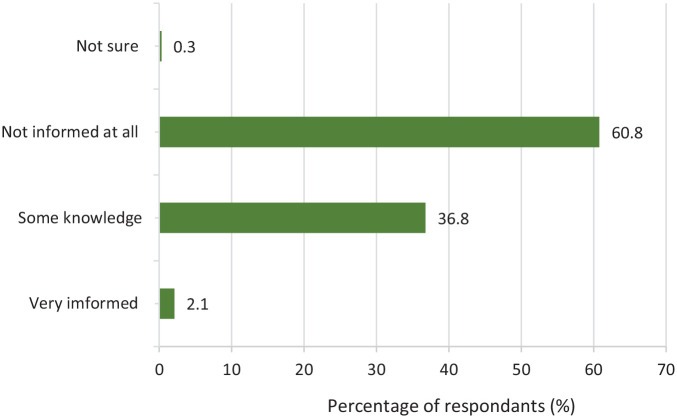
Source: PMC
What Are the 15 Signs of Perimenopause That Appear Before Hot Flashes?
Each one has a clear hormonal mechanism; meaning your body is telling you something real, not imagined.
-
Heart Palpitations

Source: magnific
Fluctuating estrogen levels can affect the autonomic nervous system and adrenaline response, causing skipped beats, fluttering, or racing heart sensations.
Many women describe this symptom as a sudden “flip-flop” feeling in the chest. It can feel alarming, especially if you’ve never experienced anxiety before. Estrogen normally helps regulate blood vessels and heart rhythm, so hormonal instability may temporarily increase sensitivity to stress hormones.
Occasional palpitations are common, but persistent chest pain or dizziness should always be medically evaluated.
2. Anxiety & Panic Attacks
Estrogen modulates GABA receptors; the brain’s calming neurotransmitter system. When estrogen fluctuates, GABA activity drops, and your nervous system becomes hyperreactive.
Progesterone, which has a natural sedative effect, also declines; removing another layer of emotional cushioning.
Research from the NIH found that psychogenic symptoms, including anxiety, affect up to 70% of women during perimenopause and menopause.
3. Brain Fog & Memory Lapses
Estrogen receptors are densely packed in the hippocampus; your brain’s memory centre. When estrogen surges and drops unpredictably, cognitive processing slows.
Women describe forgetting words mid-sentence, losing train of thought, and feeling like they “can’t think straight.” The Evernow Menopause Study found nearly 80% of perimenopausal women report brain fog.
One Reddit user also wrote:
“I thought I had early dementia before I realized it was perimenopause.”
4. Joint Pain & Stiffness

Source: magnific
Declining estrogen increases inflammation and reduces collagen support in joints and connective tissue.
Women often notice aching knees, frozen shoulder, sore hips, or stiff fingers seemingly overnight. A 2026 systematic review involving over 93,000 women linked perimenopause with increased musculoskeletal pain and stiffness.
Estrogen has anti-inflammatory effects. When levels fluctuate, joints may become more sensitive to inflammation and pain.
5. Disrupted Sleep & Insomnia
Hormonal instability disrupts melatonin, cortisol rhythms, and body temperature regulation.
Many women wake up at 3 a.m. unable to fall back asleep even before hot flashes begin. Progesterone also has calming, sleep-supportive effects, so lower levels may contribute to insomnia.
Sleep disruption often worsens other symptoms like anxiety, cravings, and brain fog.
6. Unexplained Weight Gain (Especially Belly Fat)
Source: magnific
Estrogen helps regulate insulin sensitivity and directs where fat is stored in the body.
As it falls, fat preferentially accumulates around the abdomen not because you’re eating more, but because your body’s fat-storage map has changed.
Declining estrogen also reduces metabolic rate and increases cortisol sensitivity, compounding visceral fat gain.
7. Reduced Libido
Testosterone, yes, women have it too, and it drops during perimenopause alongside estrogen. Testosterone is the primary driver of sexual desire, and even a modest decline can significantly reduce libido. Lower estrogen also reduces vaginal lubrication and blood flow to the genitals, making intercourse less comfortable, which further compounds the loss of desire.
8. Urinary Changes: Urgency, Frequency, UTIs
The bladder, urethra, and pelvic floor are all estrogen-dependent tissues. As estrogen drops, the urethral lining thins, bladder capacity can decrease, and pelvic floor muscles weaken.
This causes increased urinary urgency, more frequent urination, and a higher susceptibility to recurrent UTIs, all years before a hot flash.
Many women are treated for “overactive bladder” when the root cause is hormonal.
9. Vaginal Dryness
Vaginal tissue depends heavily on estrogen for elasticity and lubrication.
This symptom can appear years before menopause itself. Some women notice irritation during exercise, intimacy, or even daily movement.
Because many women feel embarrassed discussing it, the symptom often goes untreated despite being highly manageable.
10. Irritability, Rage & Mood Swings
Rapid estrogen fluctuations can affect emotional regulation and stress tolerance.
You may cry more easily, feel irritable, or experience sudden anger that feels alien to your usual personality. Hormonal changes can intensify emotional reactions even in women without a history of depression.
This symptom is commonly dismissed as “stress,” but these are majorly symptoms of perimenopause.
11. Fatigue & Low Energy
Fatigue during perimenopause is often deeper than ordinary tiredness. Women frequently describe feeling “drained,” even after resting. Iron deficiency, which worsens when cycles become heavier and irregular in early perimenopause, adds another layer of exhaustion.
The 2026 Flo survey found fatigue was one of the most commonly reported symptoms globally.
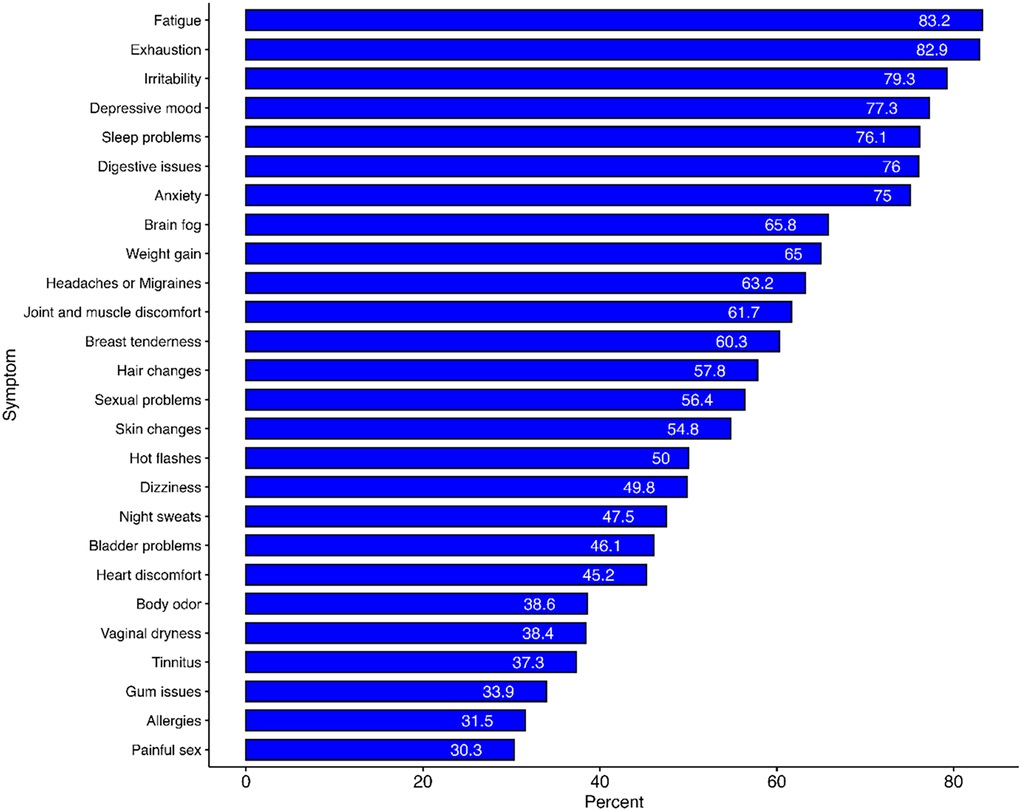
Source: 2026 – Perimenopause Symptoms Survey Chart by Flo
12. Irregular Periods
This is often the first recognizable perimenopause symptom. As ovarian reserve declines and hormonal signaling becomes inconsistent, ovulation becomes irregular leading to periods that are shorter, longer, heavier, lighter, or further apart than usual.
If your cycle has changed noticeably after years of predictability, especially in your late 30s or 40s, this is often perimenopause at work, not stress.
13. Headaches & Migraines
Oestrogen fluctuations directly affect the trigeminovascular system; the pain pathway involved in migraines.
Women who already experience hormonal migraines often find they worsen dramatically during perimenopause, as estrogen levels become erratic rather than declining gradually.
New-onset headaches in your late 30s or 40s with no prior history also call for hormonal evaluation alongside standard investigations.
14. Thinning of Hair
Hormonal shifts shorten the hair growth cycle and increase shedding.
Lower estrogen and relatively higher androgen activity may lead to thinning around the temples or crown. Stress and poor sleep can worsen the issue.
Hair changes during perimenopause are extremely common but rarely discussed openly.
15. Temperature Sensitivity & Chills
Even before full hot flashes arrive, many women notice they feel inexplicably cold, then too warm, within short intervals, particularly at night.
This is because the hypothalamus (the brain’s thermostat) is directly influenced by estrogen.
As estrogen levels rise and fall unpredictably during perimenopause, the body’s “thermoneutral zone” becomes narrower, meaning even slight environmental or hormonal shifts can trigger chills, night sweats, cold feet, or sudden overheating.
This symptom is often one of the earliest signs that hormonal changes are already underway.
What Can You Actually Do to Ease Perimenopause Symptoms?
1. Lifestyle Foundations That Move the Needle
Health experts confirm that tweaking diet, exercise, and sleep routines can offset many perimenopausal symptoms. Specifically:
- Strength training 3–4x/week: helps preserve bone density, improves insulin sensitivity, and reduces joint discomfort as estrogen declines
- High protein intake (1.2–1.6g/kg bodyweight) supports muscle mass, energy levels, and metabolism during hormonal shifts
- Omega-3s (EPA/DHA) associated with better mood, improved sleep, and fewer vasomotor symptoms like night sweats
- Magnesium glycinate at night supports GABA receptors, improves sleep quality, and reduces anxiety
- Alcohol reduction: alcohol can worsen sleep disruption, anxiety, and temperature sensitivity during perimenopause
2. Hormone Therapy (HRT/MHT): What Current Research Says
For women with moderate to severe symptoms, hormone therapy remains one of the most effective treatment options. Emerging evidence suggests that starting Hormonal Replacement Therapy (HRT) during perimenopause may also support long-term cardiovascular, metabolic, bone, and cognitive health.
The Menopause Society also states that hormone therapy can continue beyond age 65 with appropriate medical guidance and individual risk assessment.
3. Ask For the Right Tests
Hormone levels fluctuate constantly during perimenopause, which means a single “normal” blood test doesn’t always rule it out. Many doctors diagnose perimenopause based more on symptom patterns and cycle changes than lab values alone.
If symptoms are significantly affecting your quality of life, some providers may also evaluate:
- Thyroid markers (TSH, T3, T4)
- Iron and ferritin levels
- Vitamin D
- Testosterone and DHEA-S
- Progesterone and estradiol patterns
Medical Disclaimer: This article is intended for educational and informational purposes only and should not be considered medical advice, diagnosis, or treatment. Always consult a qualified healthcare professional before starting, stopping, or changing any medication.
Final thoughts
Perimenopause is one of the most misunderstood hormonal transitions women experience. The symptoms often seem random at first: anxiety, exhaustion, brain fog, joint pain, sleep disruption. But they’re frequently part of the same bigger picture: fluctuating hormones affecting nearly every system in the body. Once you recognize the pattern, the symptoms start making sense.
The most important next step is finding a healthcare provider who understands perimenopause, tracking your symptoms consistently, and advocating for deeper conversations about your hormonal and metabolic health. You deserve clear answers, evidence-based support, and a treatment plan that helps you feel like yourself again.
And that’s what Stay Healthy Stay Fit is here for. We provide honest, research-backed guidance, tips and information on all things health, fitness and wellness. Your Body Is Talking. It’s Time to Listen.
Frequently Asked Questions
1. Can perimenopause start at 35?
Yes. While the median age of perimenopause onset is around 45, early perimenopause can begin in the mid-to-late 30s. Factors including genetics, smoking, autoimmune conditions, and previous cancer treatment can accelerate onset.
2. Can you have perimenopause without hot flashes?
Absolutely. Many women go through months or years of perimenopause experiencing only “silent” symptoms like brain fog, anxiety, sleep disruption, and joint pain with hot flashes appearing much later, if at all.
3. Can a blood test confirm perimenopause?
Not definitively. Because hormone levels fluctuate wildly during perimenopause, a single blood test can appear “normal” even when you are symptomatic. Perimenopause is primarily a clinical diagnosis based on your symptom pattern and age.
4. How long does perimenopause last
On average, perimenopause lasts 4 to 8 years, though some women experience it for up to 10–14 years. Duration is influenced by genetics, ethnicity, smoking history, and age at onset.
5. What are the most unusual perimenopause symptoms?
Many women are surprised to learn that perimenopause symptoms go far beyond hot flashes. Some of the most unusual perimenopause symptoms include heart palpitations, brain fog, anxiety, joint pain, temperature sensitivity, urinary urgency, and sudden sleep disruption, all caused by fluctuating hormone levels.
